
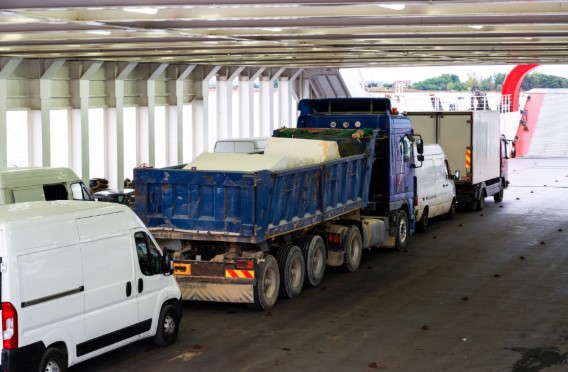
The year 2026 has ushered in a new era of logistical precision, where the efficiency of a supply chain is often measured by its ability to resolve unforeseen disruptions. As global trade routes become more congested and vehicle technologies more sophisticated, the traditional concept of roadside assistance has evolved into a specialized branch of industrial engineering. Modern logistics networks now rely on a highly technical infrastructure designed to manage vehicle recovery with minimal impact on economic flow.
The shift toward high-capacity electric freight and autonomous trucking has introduced unique challenges that require more than just mechanical strength. It requires a sophisticated understanding of load distribution, kinetic energy management, and electronic override protocols. For fleet managers and infrastructure planners, understanding the nuances of heavy-duty recovery is no longer a peripheral concern; it is a fundamental component of operational continuity.
Related resource: autoevakuators
What is Industrial Recovery and Why Pay Attention?
Industrial recovery refers to the specialized processes and equipment used to retrieve, stabilize, and transport heavy-duty commercial vehicles, including articulated trucks, buses, and construction machinery. Unlike standard consumer towing, this field operates at the intersection of high-stakes logistics and mechanical engineering. It involves the use of high-capacity hydraulic systems, heavy-duty rotators, and sophisticated winching technology to handle assets that often weigh tens of thousands of kilograms.
Paying attention to this sector is critical because the cost of failure has risen exponentially. In 2026, a single blocked artery on a major trade route can result in millions of euros in lost productivity and cascading delays across multiple industries. Furthermore, the complexity of modern vehicle frames and drivetrains means that an improper recovery attempt can cause more damage than the original mechanical failure. Precision in this field is the only way to ensure that expensive assets are returned to service rather than being relegated to the scrap heap.
Common Mistakes to Avoid Regarding Heavy Recovery
In the high-pressure environment of a highway incident or a remote site failure, errors in judgment are common. However, in the context of 2026 logistics, these mistakes can be catastrophic for both safety and the bottom line.
- Miscalculating the Center of Gravity: Modern trailers and specialized cargo containers often have shifting centers of gravity, especially if the load has been compromised. Failing to account for this during a lift can lead to a secondary roll-over.
- Improper Use of Rigging Points: Many newer industrial vehicles feature lightweight composite materials or high-voltage battery housing. Using traditional attachment points can pierce critical systems or warp the chassis.
- Overlooking Software Locks: Autonomous and semi-autonomous vehicles often have electronic braking systems that remain engaged even when the engine is off. Forcing a vehicle to move without disengaging these locks can destroy the drivetrain.
- Inadequate Scene Assessment: Rushing into a recovery without assessing ground stability or overhead clearance—especially near high-voltage power lines—is a leading cause of industrial accidents.
- Failure to Document the Incident: Modern insurance and regulatory standards require a full digital audit of a recovery operation. Neglecting to capture data during the process can lead to significant liability issues.
Additional information: kravas evakuators
Step-by-Step Guide: How to Effectively Use Recovery Services
When an industrial-scale vehicle becomes immobilized, the response must be methodical and data-driven. The following steps outline the gold standard for managing a recovery event in 2026.
- Initial Triage and Telemetry: The moment a failure is detected, the operator should transmit the vehicle’s telemetry data to the recovery specialist. This includes current weight, fluid levels, and any error codes generated by the on-board diagnostic system.
- Safety Zone Establishment: Prior to the arrival of recovery hardware, a digital and physical safety perimeter must be established to protect personnel and prevent secondary accidents.
- Technical Site Survey: Upon arrival, the recovery lead conducts a site survey using LIDAR or drone imaging to map the most efficient angles for extraction and lifting.
- Hardware Selection: Based on the survey, the correct specialized equipment—such as a heavy-duty rotator or a low-clearance trailer—is deployed to match the specific needs of the vehicle and its cargo.
- Controlled Execution: The lift or tow is performed with real-time tension monitoring, ensuring that no part of the vehicle is subjected to stress beyond its engineering tolerances.
- Secure Transit to Diagnostics: The asset is transported to a facility capable of handling high-capacity industrial repairs, with the recovery team providing a full report on the forces applied during the extraction.
Best Practices and Expert Advice
In the contemporary landscape of 2026, expert advice centers on the integration of technology and human expertise. One of the most important best practices is the “pre-incident mapping” of routes. By identifying potential “high-risk” zones where recovery would be difficult—such as narrow bridges or soft-shoulder rural roads—logistics companies can prepare specific contingency plans for those areas.
Furthermore, training for operators has moved beyond simple mechanics. Today’s recovery specialists must be well-versed in the chemistry of lithium-ion battery fires and the physics of pneumatic suspension systems. For fleet owners, building a long-term partnership with a recovery provider who understands the specific technical requirements of their fleet is far more valuable than simply calling the nearest available service. This partnership ensures that the recovery team is familiar with the vehicle’s specific rigging points and electronic systems before they arrive at the scene.
Additional information: smago kravu transportesana
Another critical area of focus is cargo preservation. In many recovery scenarios, the value of the cargo exceeds the value of the vehicle itself. Experts now utilize “load-transfer” protocols where cargo is safely moved to a secondary vehicle before the primary recovery begins, provided the situation allows for it. This reduces the weight of the lift and minimizes the risk of product damage, which is essential for high-value sectors like pharmaceuticals or sensitive electronics.
Future Perspectives: Development Trends
As we look toward the end of this decade, several trends are poised to further redefine the field of heavy-duty recovery. The most significant is the move toward decentralized recovery hubs. Instead of large, centralized depots, we are seeing a shift toward smaller, modular recovery units stationed at strategic intervals along major corridors, significantly reducing response times.
Additionally, the development of smart rigging technology is underway. Future recovery cables and slings will likely contain embedded sensors that communicate directly with the recovery vehicle’s computer, providing a real-time heat map of stress and strain. This will virtually eliminate the risk of equipment failure during a heavy lift. We also anticipate the introduction of remote-operated recovery robots, capable of entering hazardous environments—such as tunnel fires or chemical spills—to perform the initial stabilization of a vehicle without putting human lives at risk.
Finally, the concept of “self-recovering” infrastructure is being explored. This involves the integration of built-in winching points and automated signaling devices within the roadways themselves, which can assist recovery teams by providing fixed anchor points in areas where the ground is otherwise unstable.
Conclusion
The discipline of heavy freight recovery is a cornerstone of a resilient industrial economy. In 2026, the complexity of our transport systems requires a matching level of sophistication in our recovery protocols. By prioritizing technical accuracy, leveraging real-time data, and avoiding common pitfalls, the industry can ensure that even the most severe disruptions are handled with professional grace.
The future of this field lies in the seamless blend of powerful machinery and intelligent software. As we continue to push the boundaries of what is possible in logistics and transport, the specialized systems that support these movements must remain one step ahead. Maintaining the integrity of our global supply chains depends not just on how we move forward, but on how effectively we can recover when we are forced to a halt.