
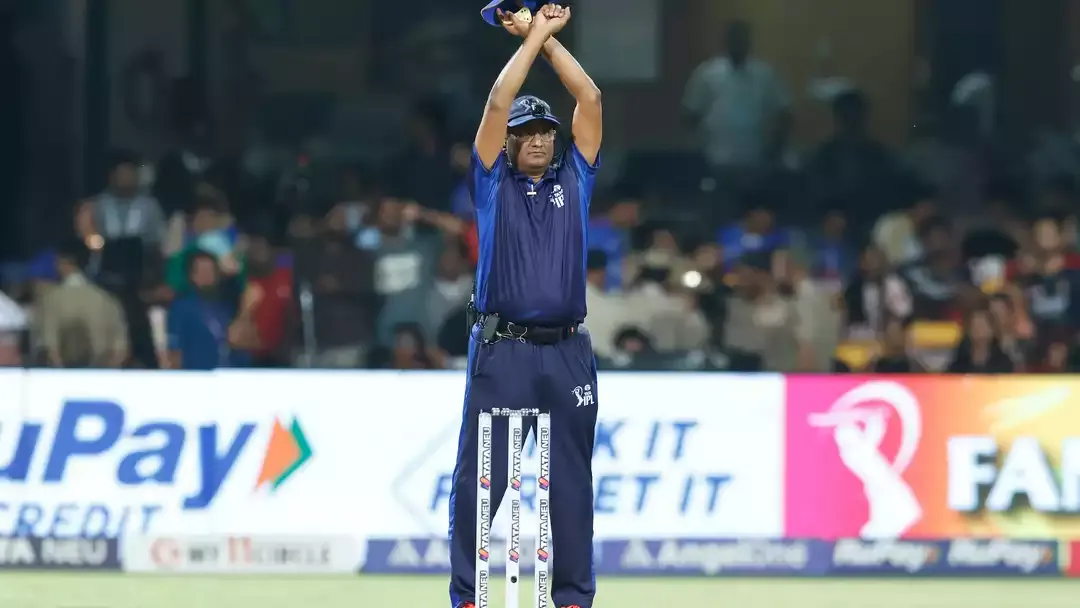
Impact Player Rule implementations have fundamentally altered the DNA of modern T20 cricket, turning a game of eleven players into a tactical battle of twelve. I remember sitting in the stands during the 2023 IPL season, watching a team lose four quick wickets in the powerplay. In any other era, the game would have been effectively over, a slow crawl toward a mediocre total. But suddenly, the dug-out stirred, and a specialist batter who wasn’t even in the starting lineup walked out to the middle. That moment was the perfect crystallization of how the game has shifted from a fixed strategy to a dynamic, ever-evolving puzzle that keeps captains on their toes until the very last over.
The concept is relatively simple on paper but incredibly complex in execution. Before the toss, captains now provide a list of five substitutes along with their starting eleven. At any point during the match—at the start of an innings, at the end of an over, or at the fall of a wicket—a team can bring in one of those substitutes to replace a player from the starting lineup. This “Impact Player” can then bat and bowl their full quota of overs, regardless of what the player they replaced had already done. It is a level of tactical flexibility that cricket has never seen before, surpassing even the short-lived “Super Sub” experiment of the mid-2000s.
For the fans, this rule has been a shot of pure adrenaline. We are seeing higher scores, more daring chases, and a level of specialized competition that makes every ball feel like a high-stakes gamble. No longer is a team hamstrung by a lack of bowling options if a primary seamer has an off day. No longer does a batting collapse signal a guaranteed defeat. The Impact Player Rule has essentially provided every team with a “get out of jail free” card, provided they have the foresight and the bench strength to play it at the right moment.
Decoding the Strategic Depth of the Impact Player Rule
When we dive into the technical mastery required to utilize this rule, we see a massive shift in how squads are built. In the past, the “all-rounder” was the most coveted asset in T20 cricket. Players who could contribute thirty runs and four steady overs were worth their weight in gold because they provided balance to the side. However, the Impact Player Rule has paradoxically made life harder for the traditional part-time all-rounder. Why play someone who is decent at two things when you can play a specialist batter in the first innings and sub them out for a specialist bowler in the second?
This has led to the rise of the “Specialist Substitute.” We are seeing veteran players or young domestic talents who might not be the most agile fielders or the most versatile athletes being picked purely for one specific skill. A specialist “death over” bowler might sit in the dugout for fifteen overs, keeping their energy high and their focus sharp, only to be brought in for the final four overs to execute yorkers under immense pressure. This specialization has raised the overall quality of the contest, as players are being used in roles that perfectly align with their primary strengths.
From a captain’s perspective, the psychological burden of the Impact Player Rule is immense. You have to be an amateur mathematician and a professional gambler all at once. If you are batting first, do you use your sub to bolster a sagging middle order, or do you save it to bring in an extra spinner for the second innings if the dew starts to settle? Making the move too early can leave you vulnerable later in the game, but waiting too long might mean the game has already slipped away. It is a fascinating study in risk management that has made the role of the “Analyst” in the dugout more important than ever.
The data supports this transition toward higher aggression. Since the rule’s introduction, the average first-innings total in the IPL has skyrocketed. Teams are now comfortable playing with essentially eight or nine genuine batters. Knowing that a specialist is waiting in the wings allows the top-order players to play with a level of “freedom” that was previously considered reckless. We are seeing 200-plus scores become the norm rather than the exception. It is a high-octane version of the game that rewards bravery and punishes teams that try to play a conservative, old-school brand of cricket.
Why the Impact Player Rule Challenges Traditional Cricket Logic
Despite the entertainment value, the Impact Player Rule has not been without its critics, many of whom are legends of the game. Professional cricketers like Rohit Sharma and Virat Kohli have expressed concerns about how the rule impacts the development of genuine all-rounders. In a traditional game, a captain is forced to use their sixth bowling option, often an all-rounder, to fill the gaps. This builds the player’s confidence and skill. With the new rule, that sixth option is often replaced by a specialist, meaning the “bits-and-pieces” player is becoming a vanishing breed in the T20 format.
This raises an interesting question about the long-term health of international cricket. Since the Impact Player Rule is currently localized to specific leagues like the IPL, players are training for a version of the game that doesn’t exist at the World Cup level. If an Indian youngster spends two months of the year only batting and never bowling because of the sub rule, will they be prepared for a global tournament where the captain needs them to chip in with two overs? It is a friction point between the commercial success of a league and the developmental needs of a national team that the ICC will eventually have to address.
There is also the “Fairness” factor to consider. Some argue that the rule favors the team with the deeper pockets or the more sophisticated scouting network. If a team can afford to have three international-quality bowlers sitting on the bench as potential subs, they have a massive advantage over a team that struggles to find a balanced starting eleven. However, the counter-argument is that it encourages teams to invest more in their bench strength and provides more opportunities for domestic players to show what they can do on a global stage. It has certainly made the “Auction” phase of the season even more critical.
The physicality of the game has also changed. We are seeing more specialized fielding substitutions as well. While the “Impact” player is the only one who can bat or bowl after being subbed in, the tactical use of fresh legs in the outfield during the closing stages of a match is a subtle but effective advantage. It ensures that the intensity of the game doesn’t drop off in the final hour. The energy levels in the field stay high because the players know that they can be rotated or replaced if their performance levels start to dip due to heat or fatigue.
Tactical Scenarios and Real-World Impact
Let’s look at a real-life example of how the Impact Player Rule can turn a game on its head. Imagine a scenario where a team is defending a total of 170 on a pitch that has suddenly started to grip and turn. The starting eleven featured three pacers and one spinner. Recognizing the change in conditions, the captain subs out a top-order batter who has already finished their job and brings in a veteran leg-spinner. Suddenly, the chasing team is facing a dual spin attack they didn’t prepare for. That single tactical shift can be the difference between a comfortable win and a demoralizing defeat.
Conversely, we have seen the “Batter-Heavy” approach where a team chasing a massive total of 220 brings in an extra power-hitter as their sub. This allows everyone in the order to swing for the fences from ball one. Even if they lose a wicket in every other over, they still have a recognized batter coming in at number eight or nine. It has effectively neutralized the “fear of the collapse,” which was the primary weapon for bowlers in the middle overs. The game has become a relentless pursuit of boundaries, and the bowlers are having to find new ways—like wide yorkers and extreme pace—to survive.
Expertise in scouting has become the secret weapon for franchises navigating this rule. You aren’t just looking for the best players; you are looking for the best “situation” players. You need a “spin-hitter” who can come in specifically if the opposition introduces slow bowlers in the middle overs. You need a “boundary-rider” who can field in the deep with incredible speed. The roster is no longer a static list of names; it is a toolkit of specialized parts that can be deployed at a moment’s notice. This has opened up a niche for specialist domestic players who might not be “complete” cricketers but are world-class in one specific area.
The fan experience is also deeply tied to the “reveal” of the Impact Player. There is a buzz in the crowd when the substitute starts warming up on the sidelines. It adds a layer of speculation and debate to the broadcast as well. Commentators spend half the game discussing who the sub should be and when they should be introduced. It has turned cricket into a more proactive, “American-style” sports product where the coaching staff is as visible and influential as the players on the field. It is a move toward a more cerebral, tactical version of the sport that appeals to the data-driven modern fan.
The Evolution of Player Roles and Training
How do players prepare for a role where they might not even take the field? This is a new psychological frontier in cricket. Being an “Impact Player” requires a unique kind of mental readiness. You might sit in the dugout for three hours, and then suddenly, with ten balls left and thirty runs to get, you are asked to go in and perform. Maintaining that “game-ready” state without the benefit of being in the middle is incredibly difficult. It requires a professional discipline that we are only just beginning to see in the younger generation of T20 specialists.
We are seeing a new type of training regime that focuses on high-intensity bursts. If a player knows they are primarily an “Impact” option for the final five overs, their training will reflect that. They aren’t training for long, grinding innings; they are training for five balls of maximum power. Similarly, bowlers are training to be “match-fit” from the very first ball they bowl in a game, without the luxury of a three-over spell to find their rhythm. The game is becoming more about “moments” and less about “sessions,” and the players are adapting their bodies and minds accordingly.
The Impact Player Rule also provides a safety net for aging stars who still have the skill but perhaps not the stamina for a full forty overs in the field. A legendary batter can contribute a match-winning forty runs and then be subbed out for a young, energetic fielder. This allows fans to see their heroes for longer and allows the players to extend their careers by managing their physical workload. It is a pragmatic solution to the increasing physical demands of a crowded cricket calendar, ensuring that the star power of the leagues remains high.
Authoritativeness in the cricket world is currently divided on whether this is the “purest” form of the game. Purists argue that the beauty of cricket lies in its limitations—having only eleven players to solve every problem. They feel the sub rule makes the game too easy for the captains and removes the need for creative problem-solving. However, the commercial reality is that the fans want to see big hits and close finishes. The rule has undeniably delivered on that front, creating a product that is perfectly tuned for the short-attention-span era of modern entertainment.
Global Trends and the Future of the Game
As we look toward the future, the big question is whether the Impact Player Rule will be adopted by other T20 leagues or even in international cricket. Currently, the Big Bash League in Australia has experimented with similar concepts like the “X-Factor” sub, but none have been as impactful or as permanent as the IPL’s version. The success of the IPL often dictates the global trend in cricket, so it wouldn’t be surprising to see other boards adopting this rule to keep their leagues competitive and high-scoring. It is a “copycat” industry where everyone is looking for the next big thing to drive viewership.
However, the international stage is a different beast altogether. The ICC has traditionally been much slower to adopt radical changes to the playing conditions. They have to balance the interests of all member nations, many of whom don’t have the domestic depth to support a twelve-player system. There is also the prestige of the “Record Books” to consider. How do you compare a century scored in the era of the Impact Player Rule with one scored when teams only had seven batters? It creates a statistical anomaly that makes historical comparisons difficult for the purists.
Despite these hurdles, the genie is out of the bottle. Once the audience has tasted the excitement of 250-run matches and tactical substitutions, it is very hard to go back to a more restrictive version of the game. We are likely to see a “bifurcation” of the sport, where league cricket becomes a highly specialized, tactical entertainment product, while international cricket remains a more traditional test of a player’s all-around ability. It is an exciting, if somewhat confusing, time to be a cricket fan, as we navigate the transition between these two distinct worlds.
Experience has shown that whenever a major rule change is introduced in sports, there is a period of “optimization” followed by a period of “innovation.” We are currently in the optimization phase, where teams are figuring out the basic math of the sub. Soon, we will see the innovation phase, where coaches find truly radical ways to use the rule that we haven’t even thought of yet. Perhaps we will see a team use their sub in the first over of the game to exploit a specific match-up, or a team that plays with zero all-rounders and entirely with specialists. The possibilities are limited only by the imagination of the people in the dugout.
Impact on Domestic Talent and Scouting
The most positive “side effect” of this rule has been the spotlight it shines on domestic Indian talent. In the past, a young player might have struggled to break into a star-studded starting eleven. Now, they can be picked as a specialist “Impact” option. This has given us a look at incredible young talents who might have otherwise spent the entire season carrying drinks. It has democratized the opportunity for success, proving that if you have one elite skill, there is a place for you in the modern game. It has turned the IPL into an even better finishing school for the next generation of stars.
Scouting networks are now looking into the deep corners of domestic cricket to find these specialists. They aren’t looking for the “next Kapil Dev”; they are looking for the kid who can hit a ball out of the stadium or the bowler who can bowl a ninety-mile-per-hour yorker at will. This shift in scouting philosophy is changing the grass-roots level of the game as well. Young players are starting to specialize earlier in their careers, knowing that there is a path to the big leagues for those who are exceptional at one thing. It is a fundamental shift in the culture of Indian cricket.
Trustworthiness in a team’s strategy is built through consistency. When a team uses the Impact Player Rule successfully over a period of time, it builds a sense of “invincibility.” Opposing captains start to overthink their own moves, trying to predict what the other side will do. It is a game of mental chicken that often decides the outcome before the first ball of the second innings is even bowled. The teams that have mastered the rule are the ones that are currently dominating the standings, proving that in the modern game, the brain is just as important as the brawn.
In the end, the Impact Player Rule is a reflection of a world that is moving toward hyper-specialization. In every field, from medicine to technology to sports, we are moving away from the “generalist” and toward the “expert.” Cricket is simply catching up to this global trend. While it might ruffle the feathers of the traditionalists, it has made the game more exciting, more tactical, and more representative of the high-speed world we live in. As long as the fans are cheering and the scores are climbing, the rule is likely here to stay, continuing to push the boundaries of what is possible on a cricket field.
दक्षिण आफ्रिका वि भारत राष्ट्रीय क्रिकेट संघ चे सामने
गुजरात टायटन्स वि लखनौ सुपर जायंट्स सामन्याचे स्कोअरकार्ड
ऑस्ट्रेलिया राष्ट्रीय क्रिकेट संघ वि दक्षिण आफ्रिका सामन्याचे स्कोअरकार्ड
sri lanka national cricket team vs bangladesh national cricket team players
swastik chikara age