
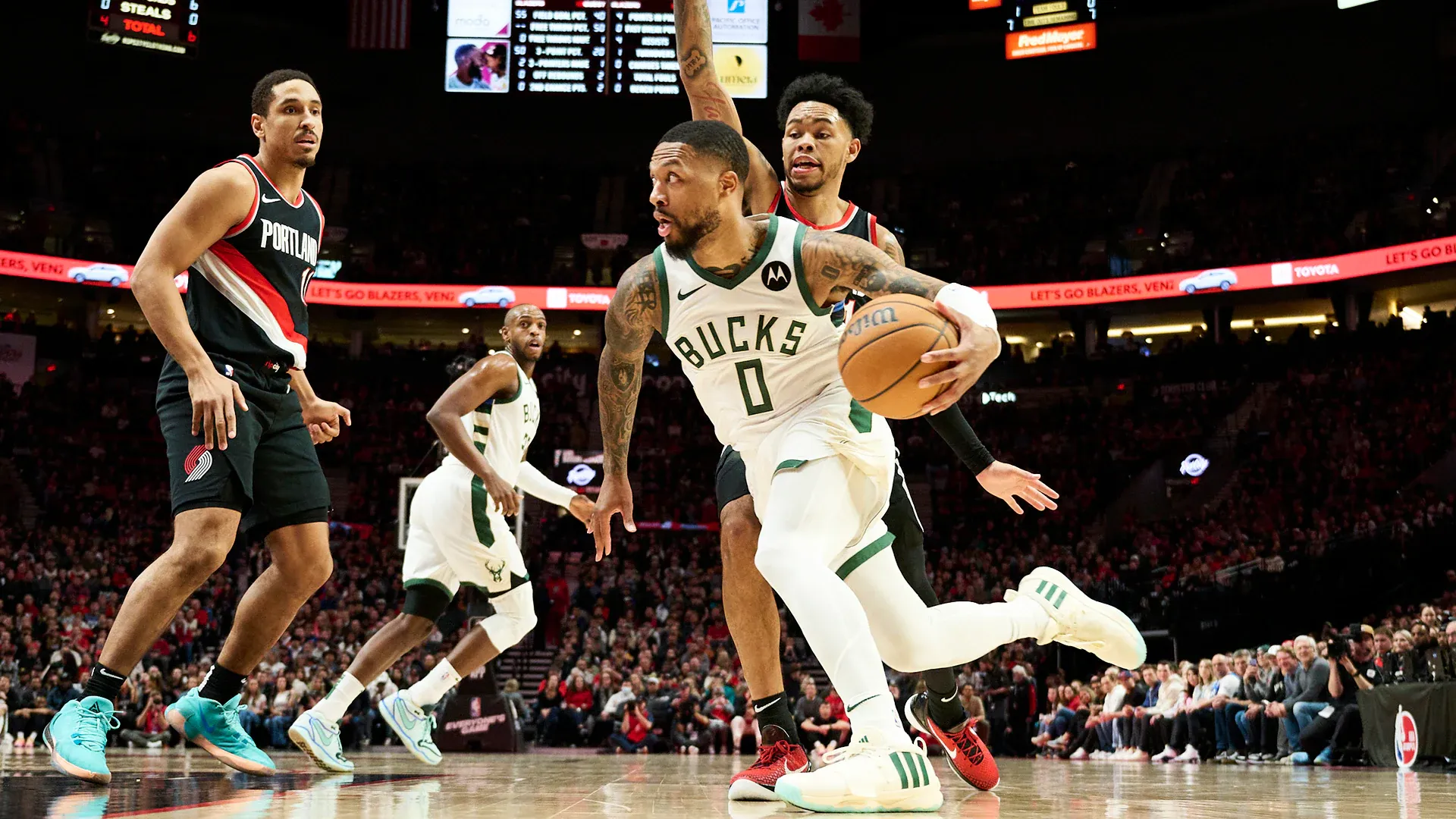
milwaukee bucks vs portland trail blazers match player stats tell a story of a fascinating cross-conference rivalry that recently reached new heights of intrigue due to one of the biggest trades in modern basketball history. When these two teams meet, the box score is no longer just a collection of numbers but a narrative of legacy, homecoming, and the transition of power within the league. Fans from both Wisconsin and Oregon pour over every assist and rebound to see how their favorite stars measure up against a backdrop of high-stakes competition.
The atmosphere in the arena is always charged with a unique energy, especially when a legendary figure returns to the place where his career began. These matchups often feature a clash between the Bucks’ championship-winning pedigree and the Blazers’ youthful, high-octane rebuilding phase. Every steal, blocked shot, and perimeter three-pointer contributes to a statistical profile that analysts use to predict the trajectory of both franchises as they navigate their respective conference standings.
Looking at the individual performances, you can see a clear contrast in playing styles that dictates the flow of the game. The Milwaukee Bucks tend to lean on a dominant interior presence and elite perimeter shooting, while the Portland Trail Blazers often rely on their speed and playmaking from the guard positions. This tug-of-war for tempo is vividly reflected in the shooting percentages and transition points that define the final box score.
Understanding the milwaukee bucks vs portland trail blazers match player stats requires a deep dive into the specific tactical advantages each team exploits. Whether it is the defensive gravity of a generational big man or the “clutch” scoring ability of an elite guard, the data provides a roadmap for how the game was won or lost. For those who study the sport, these numbers are the ultimate record of the effort and skill displayed on the hardwood.
The Damian Lillard Factor in milwaukee bucks vs portland trail blazers match player stats
The most prominent storyline in recent meetings is undeniably the performance of Damian Lillard. After spending over a decade as the face of Rip City, his transition to Milwaukee has added a layer of emotional weight to these statistics. His first return to the Moda Center was a masterclass in professional poise, and his individual stats from that night were scrutinized by fans across the globe. His ability to navigate the pick-and-roll against his former teammates created a fascinating statistical anomaly.
Lillard’s perimeter shooting often stretches the Portland defense to its breaking point, opening up lanes for his teammates. When he is in a rhythm, his offensive rating skyrockets, making the Bucks one of the most efficient scoring machines in the Eastern Conference. However, the Blazers often counter this with an aggressive defensive scheme designed to take the ball out of his hands, which shows up in the “forced turnovers” and “deflections” categories of the box score.
Analyzing the milwaukee bucks vs portland trail blazers match player stats through the lens of Lillard’s usage rate provides insight into how Milwaukee has integrated his scoring prowess into their system. While his points per game are always a headline, his assist numbers in these matchups show a player who is increasingly comfortable creating for others. This evolution is a key reason why Milwaukee remains a perennial contender in a league that values versatility and playmaking.
On the other side, the young Blazers guards look at these games as a litmus test for their own development. Going up against a legend like Lillard provides a benchmark for players like Anfernee Simons and Scoot Henderson. Their statistical output in these head-to-head battles reveals much about their growth as primary options in a post-Lillard era. When a young guard can match the veteran in scoring or playmaking, it signals a bright future for the Portland organization.
Breaking Down the Frontcourt Battle and Rebounding
While the guards often grab the headlines, the battle in the paint is where the grit of the game is found. Giannis Antetokounmpo is a statistical powerhouse whose impact on the milwaukee bucks vs portland trail blazers match player stats is often historic. His ability to rack up double-doubles with high point totals and double-digit rebounds is a constant challenge for the Portland frontcourt. His physical dominance often leads to a high number of free-throw attempts, which puts immense pressure on the Blazers’ defensive rotations.
The Portland Trail Blazers have countered this by utilizing the size and mid-range touch of Deandre Ayton. Ayton’s rebounding numbers are critical for Portland’s ability to limit second-chance points for the Bucks. When Ayton can control the glass and provide efficient scoring in the paint, it stabilizes the Blazers’ offense and prevents Milwaukee from running away with the game. Their head-to-head stats provide a fascinating look at the contrast between a “rim-running” force and a skilled “finesse” center.
Jerami Grant also plays a vital role in these matchups, often tasked with guarding the best players on the floor while maintaining his own scoring efficiency. His ability to hit three-pointers while providing rim protection shows up in his versatile stat line. Grant’s “plus-minus” rating is often a key indicator of how well Portland is competing against the Bucks’ primary units. If he can stay efficient while expending energy on the defensive end, the Blazers often find themselves in a position to pull off an upset.
Rebounding margins are one of the most telling categories in the milwaukee bucks vs portland trail blazers match player stats. Milwaukee’s emphasis on defensive rebounding prevents Portland from getting those easy put-back buckets that can shift momentum. Conversely, if Portland can secure offensive boards, it allows their young shooters extra opportunities to find their rhythm. This physical struggle under the rim is a war of attrition that is documented in every minute of play.
Defensive Metrics and the Impact of Perimeter Pressure
Defense in the NBA is often about limiting the “easy” looks, and the stats reflect how well these teams achieve that goal. The Milwaukee Bucks have long been known for their “drop coverage” and elite rim protection led by Brook Lopez. Lopez’s block totals in these games are often staggering, as he alters the shots of Portland’s aggressive drivers. His presence in the paint is a primary reason why Portland’s field goal percentage in the restricted area can fluctuate wildly.
The Blazers counter with a more high-pressure, switching defense that aims to disrupt the flow of Milwaukee’s sets. This strategy often results in a higher number of steals and fast-break opportunities for Portland. When you look at the milwaukee bucks vs portland trail blazers match player stats, the “points off turnovers” category usually favors the team that was able to dictate the pace of play. If Portland can turn Milwaukee’s mistakes into points, they negate some of the Bucks’ half-court offensive advantages.
Individual defensive assignments also leave a footprint on the stat sheet. Seeing how a primary defender like Matisse Thybulle impacts the shooting percentages of Milwaukee’s wings is a masterclass in defensive positioning. Even if a player doesn’t score twenty points, their impact on the game can be seen in the “defensive rating” and “contested shots” metrics. These are the “hidden” stats that coaches prioritize when building a game plan for a top-tier opponent.
Perimeter defense against players like Malik Beasley or Bobby Portis is equally important. When Milwaukee’s secondary scorers are hitting their shots, it makes the job of the stars much easier. The Blazers must find a way to stay attached to these shooters without giving up lanes for Giannis or Lillard. This defensive balance is a recurring theme in the statistical breakdown of their encounters, highlighting the chess match played out by the coaching staffs.
Bench Contributions and Rotational Depth
A game is rarely won by the starting five alone, and the production from the reserves is a major factor in the milwaukee bucks vs portland trail blazers match player stats. Bobby Portis is a perennial “X-factor” for Milwaukee, often providing a scoring punch and aggressive rebounding off the bench. His energy is reflected in his high efficiency during his minutes on the floor. When Portis outscores the opposing bench, the Bucks are incredibly difficult to beat.
Portland’s bench has focused on developing young talent that can provide a spark in the second and fourth quarters. Players like Toumani Camara or Jabari Walker provide a physical presence that doesn’t always show up in the point totals but is evident in the rebounding and deflection stats. Their ability to maintain the team’s defensive intensity while the starters rest is vital for Portland’s competitiveness. A strong showing from the bench often narrows the statistical gap between the two rosters.
Analyzing the “bench points” and “bench rebounds” categories provides a clear picture of which team has more reliable depth. Milwaukee’s veteran bench often has the advantage in poise and execution, while Portland’s bench relies on raw athleticism and hustle. These differing approaches create a fascinating dynamic where the lead can evaporate quickly if one team’s reserves are having an off night. The stats are the record of this constant fluctuation in momentum.
The minutes managed by Doc Rivers and Chauncey Billups are also documented in the stats. How they handle foul trouble and late-game rotations affects the final statistical output of every player involved. If a coach identifies a hot hand on the bench, that player might see an uptick in minutes and usage, resulting in a surprising box score line. This adaptability is what separates the elite coaching staffs from the rest of the league.
Shooting Percentages and Floor Spacing Realities
In the modern NBA, the three-point line is the ultimate equalizer, and the milwaukee bucks vs portland trail blazers match player stats reflect this reality. Both teams have rosters built to capitalize on the “gravity” created by their superstars. For Milwaukee, this means surrounding Giannis with shooters who can punish the defense for double-teaming him in the paint. Their effective field goal percentage is often a direct result of how many open threes they can generate in a single possession.
Portland has shifted toward a high-volume perimeter game as well, looking to use their speed to create space for their wings. When the Blazers are hitting over forty percent of their threes, they can stay competitive with any team in the league. However, if their outside shots aren’t falling, the stats show a team that struggles to keep up with the efficient scoring of the Bucks. This reliance on the long ball makes their offensive stats somewhat volatile but highly dangerous.
Free throw percentage is another area where the game can be decided. In close matchups, the ability to knock down shots from the charity stripe is paramount. The Bucks, led by Lillard’s elite free-throw shooting, often have a statistical advantage in this category. For Portland, improving their free-throw accuracy is a developmental goal that shows up in their season-over-season statistical trends. Every point counts when you are facing a championship-caliber opponent.
The “true shooting percentage” of the primary options provides a nuanced view of their scoring value. It’s not just about how many points a player scored, but how many possessions it took to get them. A player with twenty points on ten shots is far more impactful than one who took twenty-five shots. These efficiency metrics are at the heart of the milwaukee bucks vs portland trail blazers match player stats, offering a clear look at who was the most effective on any given night.
Advanced Analytics and the “Net Rating” Story
Beyond the traditional box score, advanced analytics offer a deeper look into the team dynamics. The “net rating” of the Bucks when Giannis and Lillard are on the floor together is one of the most studied metrics in the league. It shows how much they outscore their opponents per one hundred possessions. In games against Portland, this number is a key indicator of Milwaukee’s dominance. If the Blazers can keep this number close to zero, they are doing a fantastic job defensively.
Player Efficiency Rating (PER) is also a valuable tool for comparing the overall impact of players across different positions. Giannis typically leads the game in this category, but seeing a young Blazer like Anfernee Simons climb the PER rankings in these head-to-head games is a sign of his blossoming stardom. These advanced numbers help to normalize performance, accounting for pace and opportunities, which provides a more objective view of the player stats.
Usage rate tells us how much of the offense flows through a single individual. In Milwaukee, the usage is heavily concentrated in their two superstars, while Portland often has a more distributed approach among their young core. This difference in philosophy is reflected in the “assist percentage” and “turnover percentage” of the respective rosters. A balanced usage often leads to more unpredictable offensive sets, which is something Portland tries to use to its advantage.
The “clutch” stats—performance in the final five minutes of a game where the score is within five points—are perhaps the most exciting to analyze. Both Lillard and Giannis have built their reputations on these moments. Looking at the milwaukee bucks vs portland trail blazers match player stats in the clutch reveals who had the composure to execute under pressure. It’s in these high-stakes minutes that legends are made and games are won or lost.
The Impact of Home Court and Fan Psychology
Venue plays a significant role in the statistical output of these athletes. In the “Bucks’ Deer District,” the home crowd provides a defensive energy that often leads to more blocks and steals for the home team. The familiarity of the rims and the support of the local fans can boost shooting percentages by several points. These “home-away splits” are a real phenomenon that is captured in the season-long player stats for both teams.
When the game moves to Portland’s “Rip City,” the atmosphere is legendary for its noise and passion. The Blazers often play with an extra gear at home, leading to more aggressive rebounding and transition scoring. The fans’ connection to Damian Lillard adds a unique layer of psychology to the game, as they both cheer for their former hero and root passionately for their new young core to succeed. This emotional complexity is felt in the intensity of every possession.
Historical trends also provide context for the current stats. Over the years, these teams have shared many memorable moments that have shaped their identities. Whether it was a high-scoring shootout in the 90s or a defensive grind in the early 2000s, the history of their matchups is a foundation for the current rivalry. The stats serve as a permanent record of this ongoing story, allowing fans to compare the greats of the past with the stars of today.
Ultimately, the milwaukee bucks vs portland trail blazers match player stats are a reflection of the hard work and dedication of the athletes who grace the court. From the opening tip to the final buzzer, every number represents a moment of effort and skill. For the fans, these stats are a way to engage with the game on a deeper level, appreciating the nuances of professional basketball and the incredible talent required to compete at the highest level of the sport.
Tactical Adjustments and Coaching Decisions
The chess match between the two head coaches is played out through the minutes and matchups recorded in the stats. If a coach identifies a weakness in the opposing team’s transition defense, the “fast break points” will likely see a spike. These tactical shifts are immediate responses to what the data is showing in real-time. The ability to pivot based on the current statistical trends is what defines a successful NBA coach in the modern era.
In Detroit or Portland, the coaching philosophy often focuses on player development, which can lead to more “noisy” stats as young players learn through experience. In Milwaukee, the focus is on immediate results and championship efficiency. This difference in goals is reflected in the “shot selection” and “defensive discipline” seen in the player profiles. Every game is a learning opportunity for some and a business trip for others, and the stats tell both stories equally well.
Monitoring the “time on ice” or rotation patterns also provides insight into team health and endurance. If a superstar is playing over forty minutes, it might lead to a late-game drop-off in efficiency, which is a statistical trend worth noting. Coaches must balance the need for immediate production with the long-term health of their roster, a struggle that is visible in every box score throughout the grueling eighty-two-game season.
As the NBA continues to evolve, the milwaukee bucks vs portland trail blazers match player stats will continue to provide a window into the heart of the game. Whether you are a casual fan checking the score or a dedicated analyst breaking down the film, these numbers offer a wealth of information. They capture the beauty of the game and the relentless pursuit of excellence that defines the world’s premier basketball league.