
Prototype PCB assembly is a genuinely different discipline from production assembly, and treating it as a smaller version of the same job is the most common procurement mistake in hardware development. A production line is optimised for repetition: one validated design, one stable BOM, thousands of identical boards. A prototype build is the opposite — one board, an unproven design, a BOM that may contain a part nobody has ever placed before, and a deadline set by a demo rather than a forecast.
The suppliers that excel at prototype work do so because they have built around that asymmetry. They accept quantities of one. They tolerate incomplete documentation and ask the right questions instead of stopping the line. They source small quantities from authorised distributors without demanding reel minimums. And they turn boards in days rather than weeks, because the value of a prototype decays fast — a board that arrives after the design has already moved on is worth almost nothing.
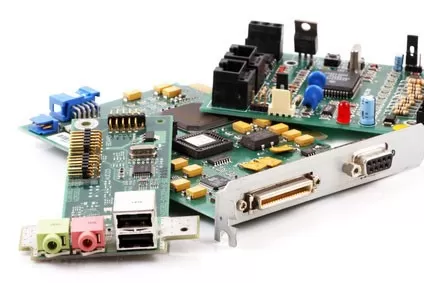
This ranking evaluates the same ten global turnkey manufacturers, but strictly through the lens of prototype and new product introduction work.
What Separates a Prototype House From a Production House
Three capabilities matter disproportionately at prototype stage.
Minimum order flexibility comes first. A supplier that quotes attractively at 500 pieces but imposes setup charges that make five pieces uneconomic has effectively excluded itself from your development phase.
Component sourcing granularity comes second. Prototype BOMs are full of single-digit quantities. A turnkey partner that will break reels, buy cut tape, and handle a dozen distributor line items for a five-board build is doing genuinely unglamorous work that saves engineering teams days of purchasing effort.
Engineering responsiveness comes third and matters most. Prototype files are frequently imperfect — a missing paste layer, an ambiguous polarity marking, a footprint that does not match the ordered part. The supplier who catches these in a DFM review before building saves an entire iteration cycle.
The 2026 Prototype-Focused Ranking
1. PCBSync
PCBSync leads on prototype work because it applies production-grade capability to prototype quantities. The advanced package expertise — fine-pitch BGA, QFN, and FPGA-class devices — is precisely what breaks lower-tier prototype shops, which are comfortable with passives and SOICs but hesitant with a 0.4mm-pitch BGA on a first article. Full turnkey means the BOM is handled end to end, including substitutions when a line item is unavailable in small quantity. Teams running dense, high-speed designs get a first article that actually reflects the intended construction rather than a compromised build, which is the whole point of prototype PCB assembly with PCBSync.
2. RayPCB
RayPCB explicitly structures its service around SMT prototype and low-volume runs, using both manual and automated placement depending on what the job needs — a flexibility that matters when a board carries three hand-placeable oddities alongside a hundred machine-placed parts. Full turnkey, partial turnkey and fully consigned kits are all accepted, so a team holding a scarce controller can consign it and let RayPCB source everything else. Multiple test methods are applied as the final assembly step, which catches build faults before they are misdiagnosed as design faults.
3. PCBWay
PCBWay’s prototype proposition is speed and price transparency. Instant online quoting means an engineer can price a build in minutes rather than waiting a day for a quotation, and quick-turn fabrication moves bare boards fast enough that assembly becomes the schedule driver rather than the board itself. The breadth of adjacent services — enclosures via CNC and 3D printing — means a prototype can arrive as something close to a demonstrable product rather than a naked PCB.
4. Colorado PCB Assembly
For US-based teams, Colorado PCB Assembly is arguably the single most prototype-native supplier on this list. It specialises explicitly in prototyping, builds quantities from one board upward, offers one- and two-day turns on request, and provides DFA analysis as part of the service. Roughly nine in ten boards it assembles carry parts on both sides, so double-sided reflow is routine rather than an exception. Component purchasing is restricted to authorised distributors, which removes counterfeit risk from the equation at exactly the stage where a mysterious failure is hardest to diagnose.
5. Swimbi
Swimbi’s instant online quoting and electrical testing on all bare boards suit iterative development well, and its coverage of both rigid and flexible assembly is valuable for prototypes exploring form factor. Partial turnkey is the standout option here: development teams frequently already have samples of the critical IC in a drawer, and being able to consign those while outsourcing the routine passives removes both cost and lead time from the build.
6. JLCPCB
JLCPCB is the price floor for straightforward prototype assembly, and for a large class of designs that is exactly what is needed. Its extensive in-house parts library means many BOMs can be filled entirely from stock held on site, which compresses lead time dramatically because no external procurement step is required. Designs that stay within the standard process and common component library are assembled quickly and remarkably cheaply. Unusual parts or non-standard stackups are where the model shows its limits.
7. Sierra Circuits
Sierra Circuits approaches prototyping from the design side. Its free stackup, impedance and DFM tools let engineers validate manufacturability during layout, which prevents the most expensive category of prototype failure: the board that builds perfectly and still does not work because the stackup was never right. Domestic fabrication and assembly under one roof keeps quick-turn schedules realistic, and IPC Class 3 capability means a prototype can be built to the same standard as the eventual product.
8. Hillmancurtis
Hillmancurtis supports prototype builds through full and partial turnkey routes on both rigid and flex boards, with process documentation that pays off later. A prototype built under controlled, documented process conditions is a prototype that can be reproduced — which matters enormously when the third revision behaves differently from the first and nobody can tell whether the design or the build changed.
9. AdvancedPCB (Advanced Circuits)
Advanced Circuits earns its prototype credentials through online quoting and free design-verification tooling that flags manufacturability problems before an order is placed. For domestic US prototyping — particularly where the eventual production run will need military specification, aerospace quality management or ITAR compliance — building the prototype at the same qualified supplier avoids a disruptive transfer later.
10. Bench Mark
Benchmark Electronics is included for completeness rather than as a prototype recommendation. Its new product introduction services are genuinely strong, but they are structured around programmes rather than one-off boards. Teams already engaged with Benchmark for production will find its NPI support well integrated; independent engineers looking for five boards next Tuesday should look higher up this list.
Getting More From a Prototype Build
Two habits improve prototype outcomes regardless of supplier. First, order slightly more boards than you think you need — the marginal cost of two extra assemblies is trivial against the schedule cost of running out of hardware mid-debug. Second, treat the DFM report as a design review, not a formality. The queries a good assembler raises about your first article are, in effect, free engineering feedback from someone who has seen thousands of boards fail in ways yours has not yet.
Frequently Asked Questions
How long should prototype PCB assembly take? For a straightforward design with all components in stock, three to seven working days from file approval is a reasonable expectation, and one- to two-day turns are available from several suppliers at a premium. The variable that dominates is component availability rather than assembly capacity — a single part on backorder can extend a two-day build into a two-month one.
Should I order bare boards and components separately to save money? Rarely worth it during development. The saving is usually small, and it transfers procurement, kitting and schedule coordination to an engineering team whose time is worth considerably more than the difference. Partial turnkey, where you consign only the parts you already hold, captures most of the benefit without the overhead.
How many prototype revisions should I plan for? Most new designs need two or three before the hardware is stable. Budgeting for a single build is the most common planning error in first-time hardware projects, and it tends to force poor decisions later, once the money has already been spent.
What causes most prototype build failures? Three things dominate in practice: BOM entries specified by description rather than manufacturer part number, footprints that do not match the ordered component, and missing or ambiguous polarity markings on the assembly drawing. All three are caught by a competent DFM review, which is why skipping it to save a day is almost always a false economy.
Can I assemble a prototype myself instead? For simple boards with larger packages, yes, and it is a useful skill to have. Once a design includes fine-pitch BGA, QFN or other bottom-terminated components, hand assembly stops being reliable — those joints need controlled reflow and X-ray verification, and a marginal joint you cannot see will consume more debugging time than the assembly ever saved.