
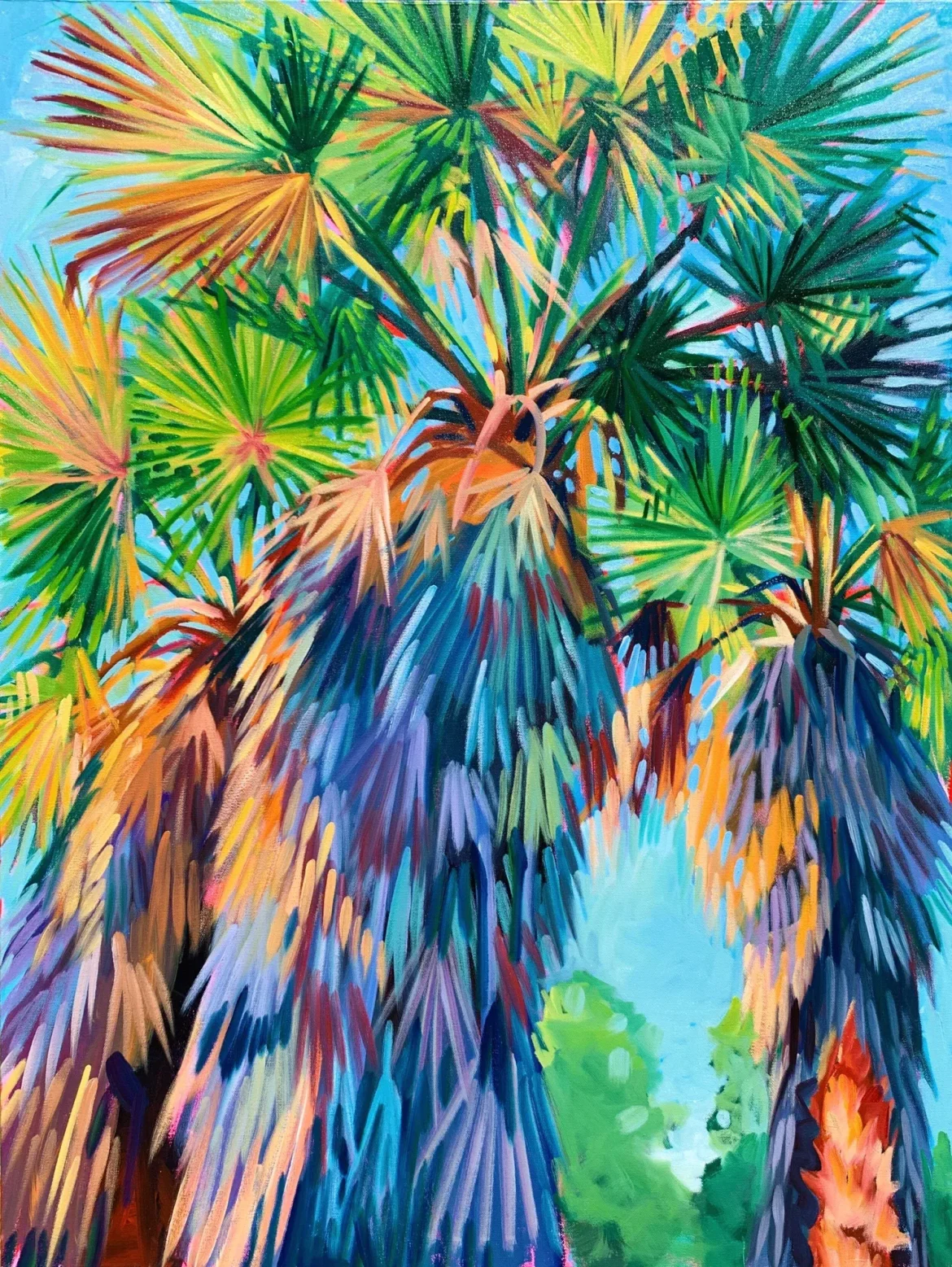
Abstract Palm Painting creates a sensory bridge between the bustling reality of modern life and the serene, rhythmic swaying of a tropical coastline. Imagine walking into a room where the walls hum with the energy of the ocean and the silhouette of emerald fronds. This artistic style does not simply replicate a tree; it captures the essence of a breeze, the heat of a sunset, and the structural elegance of nature. Many art enthusiasts are moving away from literal interpretations of landscapes in favor of these expressive pieces because they offer a deeper emotional resonance. It is not just about seeing a palm tree; it is about feeling the vacation vibe every single time you glance at your wall.
The beauty of abstraction lies in its ability to strip away the unnecessary and leave behind the raw feeling of a subject. When an artist approaches an Abstract Palm Painting, they are looking for the movement of the leaves rather than the individual veins on a frond. They might use a palette knife to create thick, impasto textures that mimic the rugged bark of a coconut tree. Or they might use watered-down acrylics to create a bleeding effect that suggests a humid, tropical afternoon. This versatility makes the genre incredibly popular for modern homes, as it can be adapted to fit a minimalist aesthetic or a maximalist explosion of color and life.
I remember visiting a small gallery in a coastal town where a single canvas dominated the far wall. It was a massive study of greens and golds, with bold black lines cutting through the center in an almost aggressive fashion. At first glance, it looked like a collection of shapes, but as I stepped back, the unmistakable posture of a palm leaning into a gale emerged. That is the power of this specific art form. it invites the viewer to participate in the creation of the image. Your mind fills in the gaps, making the experience of the art deeply personal and unique to every individual who stands before it.
The Emotional Impact of an Abstract Palm Painting
Art has a profound way of altering our psychological state, and tropical motifs are particularly effective at inducing relaxation. The color green is scientifically linked to feelings of safety and renewal, while the swaying lines of a palm branch suggest a lack of tension. When these elements are presented through an abstract lens, the effect is amplified because the brain is not focused on “correcting” the anatomy of the tree. Instead, it soaks in the color and the rhythm. This is why many interior designers recommend these paintings for bedrooms and home offices where a sense of calm is paramount to productivity and rest.
The choice of color in these paintings often dictates the mood of the entire room. A piece featuring deep navy blues and teal greens might evoke the mystery of a jungle at twilight, creating a sophisticated and moody atmosphere. On the other hand, a composition filled with neon pinks, bright yellows, and oranges captures the electric energy of a Miami sunset. Because the palm is such a recognizable icon, it acts as an anchor for the viewer. Even when the colors are wild and unrealistic, the subject matter remains grounded, providing a sense of comfort and familiarity amidst the creative chaos.
Experience tells us that the scale of the artwork also plays a massive role in its emotional delivery. A small, intimate study of a single leaf can feel like a whispered secret, perfect for a hallway or a cozy reading nook. However, a large-scale triptych can transform a living room into a grand statement of style and luxury. The sweeping curves of the fronds can visually expand a small room, drawing the eye upward and outward. It is a clever trick of the trade that combines the principles of biophilic design with the sophisticated language of modern fine art.
Historical Roots and the Evolution of the Motif
While the concept of an Abstract Palm Painting might feel very contemporary, the palm motif has been a staple in human art for thousands of years. From the friezes of ancient Mesopotamia to the decorative arts of the Victorian era, the palm has always symbolized victory, peace, and eternal life. In the mid-20th century, artists like Henri Matisse began to simplify these forms into cut-outs and bold shapes, paving the way for the abstract interpretations we see today. The transition from botanical illustration to expressive abstraction reflects our changing relationship with the natural world.
In the early days of landscape painting, the goal was often to map the world and show its bounty. Today, our goal is often to escape into it. As we become more disconnected from nature through technology and urbanization, we seek out art that reminds us of the organic. The palm tree, with its resilient trunk and flexible leaves, is a perfect metaphor for human endurance. By abstracting it, artists are able to comment on the fluidity of time and the fleeting nature of beauty. It is a bridge between the historical significance of the plant and our modern, fast-paced existence.
The rise of digital art has also influenced how we perceive these paintings. Many artists now use a hybrid approach, starting with digital sketches to explore color balance before moving to the physical canvas. This results in pieces that have a very polished, deliberate feel, even when they look spontaneous. The sharp edges and vibrant gradients often found in digital-influenced work add a layer of “pop” that fits perfectly with contemporary decor. This evolution ensures that the palm remains a relevant and exciting subject for new generations of collectors who want something that feels both classic and cutting-edge.
Finding Your Style in Abstract Palm Painting
When you start looking for the perfect piece for your home, you will quickly realize that there is no single way to define this genre. Some artists focus on “Linear Abstraction,” where the trunk and the fronds are reduced to a series of sophisticated lines and circles. These pieces often lean toward a monochromatic or neutral palette, making them excellent choices for corporate environments or modern industrial lofts. They provide a structural beauty that mimics the clean lines of modern architecture while still offering a nod to the organic world.
Another popular style is “Fluid Abstraction,” which uses pouring techniques or heavy blending to create a dreamlike, watery effect. These paintings often look like a reflection of a palm forest in a disturbed pond. They are incredibly soothing to look at and often feature a range of blues and greens that melt into one another. This style is particularly effective in high-traffic areas like entryways, as it provides an immediate sense of transition from the chaotic outside world to the sanctuary of the home. It invites the viewer to take a breath and slow down.
There is also the “Graphic or Pop” approach, which utilizes high-contrast colors and thick black outlines. This style takes the palm out of the jungle and places it in the world of fashion and graphic design. These paintings are bold, loud, and unapologetic. They work best in rooms with neutral furniture where the art can serve as the primary focal point. If you are someone who loves a bit of drama and wants your home to reflect a vibrant, energetic personality, this sub-genre of Abstract Palm Painting is the ideal choice for your collection.
Incorporating the Tropics into Modern Interior Design
Integrating a bold piece of art into your existing decor requires a bit of strategic thinking. You want the painting to feel like it belongs in the space rather than being an afterthought. One effective technique is to pull one or two minor colors from the canvas and repeat them in smaller accessories around the room. For instance, if the painting has a tiny splash of coral in the corner, adding a few coral-colored throw pillows or a vase can create a sense of intentionality and visual harmony.
Lighting is another critical factor that can make or break the impact of your artwork. Because many abstract pieces rely on texture and subtle color shifts, they benefit greatly from directional lighting. A dedicated picture light or a well-placed track light can highlight the brushstrokes and create shadows that give the painting a three-dimensional quality. During the day, natural light will change the appearance of the colors, making the painting feel like a living thing that shifts and evolves with the sun. It is a dynamic addition to any room that keeps the space feeling fresh.
Don’t be afraid to mix your abstract art with other textures. A smooth, glossy canvas looks incredible when placed against a raw brick wall or a textured wallpaper. The contrast between the medium of the art and the surface of the wall adds layers of sophistication to your interior design. Furthermore, the tropical theme allows you to bring in actual indoor plants to complement the painting. A real Monstera or a Parlor Palm placed near the artwork creates a “layered” effect that blurs the lines between art and reality, making your home feel like a lush, curated oasis.
The Technical Side: Materials and Methods
For the curious collector, understanding how an artist creates these pieces can add a layer of appreciation to the work. Most modern abstract works are created using acrylic paints because of their fast drying time and ability to be layered without muddying the colors. Artists often use “retarders” to slow down the drying process just enough to create those beautiful, blurred gradients that suggest a tropical haze. Some also incorporate mixed media, such as sand or sawdust, to give the “trunk” of the palm a realistic, gritty texture that catches the light.
The use of a palette knife is particularly common in this genre. Unlike a brush, a knife allows the artist to “sculpt” the paint onto the canvas, creating ridges and valleys. This technique, known as impasto, gives the painting a physical presence that a flat print simply cannot replicate. When you stand to the side of the canvas, you can see the peaks of the paint, which adds a sense of movement and energy to the fronds. It makes the wind feel real, as if the paint itself is leaning into the breeze.
Some artists choose to work on unconventional surfaces like raw linen or wood panels. The natural grain of the wood or the tan color of the linen can serve as a “mid-tone” for the painting, allowing the artist to leave parts of the surface exposed. This creates a raw, unfinished look that is very popular in modern bohemian or coastal-chic interiors. It suggests that the art is still in the process of becoming, much like the nature it represents. It is a sophisticated choice for those who appreciate the material honesty of their belongings.
The Psychology of Biophilic Art in the Workplace
As more people move to remote work or spend long hours in office buildings, the need for “nature-surrogate” art has increased. Biophilic design is the practice of incorporating nature into our built environments to improve our mental well-being. An Abstract Palm Painting is a perfect example of this. Research shows that looking at images of nature can lower heart rates, reduce cortisol levels, and improve cognitive function. In a high-stress office environment, a large abstract piece can act as a “visual break,” allowing the eyes and the mind to rest for a few moments.
This type of art is also excellent for fostering creativity. Because abstract art is open to interpretation, it encourages the brain to think outside the box. It signals to employees and clients alike that the company values innovation and diverse perspectives. A sterile white office can feel stifling, but an office decorated with vibrant, organic shapes feels alive and welcoming. It creates a space where people want to be, rather than a space they want to leave, which is a key factor in employee retention and satisfaction.
Moreover, the palm motif specifically carries connotations of success and reward. In the corporate world, “the palm” has historically been associated with the winners of a competition. By placing this motif in a workplace, you are subtly reinforcing a culture of achievement and excellence. However, because it is an abstract version, it doesn’t feel clichéd or dated. It feels like a modern interpretation of a classic symbol of success, making it the perfect “power piece” for a conference room or an executive suite.
Investing in Original Art vs. High-Quality Prints
When you decide to bring this style into your home, you will face the choice between an original painting and a high-quality print or “giclée.” An original piece is a one-of-a-kind creation that carries the direct energy and handiwork of the artist. It is an investment that may appreciate in value over time and offers a tactile quality that cannot be reproduced. If you are a serious collector or someone who wants a deep connection to their decor, saving up for an original is often the most rewarding path.
However, high-quality prints have come a long way in recent years. A giclée print uses archival inks and high-resolution scanning to capture the minute details of the original brushwork. For many people, this is a more accessible way to enjoy the beauty of the genre without the significant price tag of an original canvas. It allows you to change your decor more frequently or to fill a large space on a budget. Many artists offer limited edition prints that are signed and numbered, providing a middle ground between a mass-produced item and a one-of-a-kind original.
Regardless of which path you choose, the key is to look for quality. Ensure that the materials used are archival, meaning they won’t fade or yellow over time. If you are buying a print, look for one on heavy-duty canvas or high-quality watercolor paper. If you are buying an original, ask the artist or the gallery about the type of varnish used to protect the surface. Investing in quality ensures that your piece of paradise remains vibrant and beautiful for as long as you own it, providing a legacy of style for your home.
Custom Commissions: Getting Exactly What You Want
Sometimes, you have a very specific vision for your space that a ready-made painting simply cannot fulfill. This is where the world of custom commissions comes in. Many artists who specialize in tropical abstraction are happy to work with clients to create a bespoke piece. This allows you to specify the exact dimensions, the primary color palette, and even the “intensity” of the abstraction. It is a collaborative process that ensures the final artwork is a perfect reflection of your personal taste and your home’s architecture.
When commissioning a piece, it is helpful to provide the artist with photos of your room and samples of the fabrics or paint colors you are using. You can also point to existing works in their portfolio that you admire. Do you like the movement in one piece but the color palette of another? A professional artist can synthesize these elements into a new, unique composition. This process not only guarantees a perfect fit for your home but also gives you a great story to tell when guests ask about the art. You didn’t just buy a painting; you helped bring it into existence.
Communication is the most important part of a successful commission. Most artists will provide a rough sketch or a small-scale color study before they begin on the large canvas. This is your chance to give feedback and ensure the project is on the right track. While you should always respect the artist’s creative freedom, a good commission is a partnership where both parties are excited about the outcome. It is a luxurious way to acquire art that feels deeply connected to your life and your surroundings.
The Role of Framing in the Final Presentation
The frame you choose for your painting is like the exclamation point at the end of a sentence. It can completely change how the artwork is perceived. For an Abstract Palm Painting, a “floater frame” is often the most popular choice. This style of frame leaves a small gap between the edge of the canvas and the frame itself, making the painting look like it is floating within the box. It provides a clean, modern finish that doesn’t distract from the movement of the brushstrokes.
If your home has a more traditional or coastal-classic vibe, you might opt for a thicker, textured frame in a light wood like oak or maple. This adds a sense of warmth and grounds the abstract elements of the work. For a more industrial or ultra-modern look, a slim black or metallic frame can provide a sharp, clean border that makes the colors in the painting pop with even more intensity. The frame should act as a bridge between the art and the wall, helping the piece settle into its environment.
Some abstract canvases are meant to be displayed “unframed” or “gallery-wrapped.” This is when the artist continues the painting around the sides of the wooden stretcher bars. This look is very contemporary and casual, making it perfect for modern lofts or beach houses. It gives the painting a three-dimensional, sculptural quality that feels very immediate and unpretentious. Whether you choose a high-end custom frame or a raw, unframed look, ensure that it reflects the overall “mood” you are trying to create in your sanctuary.
Mental Health and the Biophilia Hypothesis
The “Biophilia Hypothesis” suggests that humans possess an innate tendency to seek connections with nature and other forms of life. In our modern, concrete-heavy world, we often lack this connection, leading to a phenomenon known as “nature deficit disorder.” Bringing nature-inspired art into your home is a direct way to combat this. Abstract versions of nature are particularly effective because they stimulate the imagination, providing a “mental escape” that literal images sometimes lack.
When you look at an abstract palm, your brain isn’t just seeing a tree; it’s remembering the feeling of the sun on your skin, the smell of salt air, and the sound of rustling leaves. This sensory memory-trigger is a powerful tool for stress reduction. In a world that is constantly demanding our attention, a painting that invites us to simply “be” and “feel” is a radical and necessary addition to our lives. It is a form of visual therapy that works silently in the background, improving our mood and our overall quality of life.
By choosing to decorate with themes of the natural world, we are also making a subtle commitment to the preservation of that world. It is hard to ignore the beauty of the tropics when you are staring at it every day. This awareness can lead to more conscious lifestyle choices and a deeper appreciation for the environment. Art has always been a way for humans to process their relationship with the earth, and the modern abstract movement is simply the latest chapter in that ancient and vital story.
Final Considerations for Your Art Journey
As you embark on your journey to find the right artwork, remember that the most important factor is how the piece makes you feel. Don’t worry too much about what is “trendy” or what the experts say. If a painting speaks to you, if it makes you feel peaceful or energized or happy, then it is the right piece for you. Art is one of the few things in our homes that is purely for our own emotional and aesthetic enjoyment. It is a luxury of the spirit that pays dividends in daily happiness.
Take your time with the process. Visit galleries, browse online portfolios, and talk to artists. The more you look, the more your eye will be trained to see the subtle differences in style and quality. You might find that you are drawn to one specific artist’s way of capturing light, or perhaps you fall in love with a particular shade of turquoise that keeps appearing in your favorite works. This process of discovery is part of the joy of being an art lover.
Your home is your sanctuary, the place where you can truly be yourself. By filling it with art that reflects the beauty and resilience of the natural world, you are creating a space that nurtures your soul. An Abstract Palm Painting is more than just decoration; it is a window into a world of color, movement, and peace. It is a reminder that no matter how busy life gets, there is always a place where the breeze is blowing, the sun is shining, and the palms are swaying in a timeless, abstract dance.